<?xml version="1.0" encoding="utf-8"?><feed xmlns="http://www.w3.org/2005/Atom" xml:lang="en"><generator uri="https://jekyllrb.com/" version="3.10.0">Jekyll</generator><link href="https://sturivny.github.io/feed.xml" rel="self" type="application/atom+xml" /><link href="https://sturivny.github.io/" rel="alternate" type="text/html" hreflang="en" /><updated>2026-09-29T09:26:19+00:00</updated><id>https://sturivny.github.io/feed.xml</id><title type="html">Serhii Turivnyi</title><subtitle>Thoughts on management, teams, technology, and meaningful work.</subtitle><author><name>Serhii Turivnyi</name><email>turivniy@gmail.com</email></author><entry><title type="html">Being a Manager, From My Experience</title><link href="https://sturivny.github.io/2026/08/24/being-a-manager-from-my-experience.html" rel="alternate" type="text/html" title="Being a Manager, From My Experience" /><published>2026-08-24T00:00:00+00:00</published><updated>2026-08-24T00:00:00+00:00</updated><id>https://sturivny.github.io/2026/08/24/being-a-manager-from-my-experience</id><content type="html" xml:base="https://sturivny.github.io/2026/08/24/being-a-manager-from-my-experience.html"><![CDATA[<p><img src="/assets/being-a-manager-from-my-experience.png" alt="Being a Manager, From My Experience" /></p>

<p>Over the past two years as a manager, I have been learning what it means to help a team do good work. Some of that learning came from my own experience, some from conversations with other managers, and some from books and research about software teams. I am still figuring things out, but my understanding of the job has changed.
<br /><br /></p>

<p>The idea I keep coming back to is simple. My job is to make it easier for people to do their work. That means understanding what gets in their way, helping them find a clear direction, and giving them the time and support they need.
<br /><br /></p>

<p>It sounds obvious when I put it like that. In practice, it is easy to get pulled into other things.
<br /><br /></p>

<p>Technical work, for example, can feel much more comfortable than management work. A broken configuration gives you something specific to investigate. When you fix it, you can see the result. Understanding why a colleague is unhappy after three months in the team is much less straightforward. There may be several reasons, and finding them takes time, patience, and a willingness to listen.</p>

<p>I can see why managers are tempted to spend their time on problems they already know how to solve. But if that takes up most of the day, who is looking after the team?
<br /><br /></p>

<p>There is another part of the role that I think deserves more attention. Being a manager changes your relationship with people. You can be friendly and work closely together, but your words carry a different weight when you also influence someone’s performance review, pay, or career. Good intentions do not make that difference disappear. I need to remember it when I ask a question, suggest an idea, or invite someone to disagree with me.</p>

<p>That is part of why trust matters so much. People need room to use their judgment, ask for help, and say when something is not working. They also need time to think. A manager can say all the right things about trust and still make good work difficult by filling the week with meetings or constantly changing priorities.
<br /><br /></p>

<p>I have come to see protecting people’s time as a basic form of respect. An interruption may take only a few minutes on my calendar, but it can cost someone else much more. They have to leave a problem, deal with the interruption, and then find their way back into what they were doing. If that happens throughout the day, there may be very little time left for focused work.
<br /><br /></p>

<p>Changing direction has a similar cost. Sometimes priorities really do need to change. But each change asks people to put something down, understand a new problem, and decide what to do with the work they have already started. Before asking the team to switch, I think it is worth asking whether the change is necessary and whether I can explain why.
<br /><br /></p>

<p>A colleague described leaving a busy office because it had become too noisy. At home, in a peaceful setting, he got more done in one day than he had during the previous two days in the office. Different people need different things from their workplace, and noise or other distractions can affect some people much more than others. I do not think there is one arrangement that suits everyone. The useful starting point is to listen.
<br /><br /></p>

<p>How I think about productivity. Better tools and automation can help, especially when they remove repetitive work. But they cannot make up for unclear priorities, constant interruptions, or a team that feels unable to speak openly.</p>

<p>Pressure cannot solve those problems either. A team may rush to meet a deadline, but some of the cost appears later. Less careful design, more cleanup, tired people, and work they do not feel proud of. Real emergencies happen. People sometimes need to make an extra effort. What worries me is when that becomes the normal way of working, with no time to recover or deal with what was left unfinished.
<br /><br /></p>

<p>People need a pace they can keep up, and they need to feel good about what they are building. That is much harder when every task is urgent and quality is always the first thing to give way.
<br /><br /></p>

<p>Of course, giving people space does not mean leaving them without direction. Teams need shared ways of working. A useful process helps people coordinate, remember important steps, and avoid repeating mistakes. The trouble starts when following the process becomes more important than the work it was meant to support.
<br /><br /></p>

<p>I think the same is true of metrics. Numbers can help us notice a problem or understand whether a change is helping. But once people feel judged by a number, that number can start shaping their behavior in ways we did not intend. A team asked to deliver 50 story points every sprint may get better at reporting 50 points without getting better at solving the customer’s problem.</p>

<p>I want measurement to lead to a useful conversation. What are we trying to improve? Why does it matter? What would progress look like, and what do we need to protect along the way? The team should understand why we are measuring something and have a say in whether it is useful.</p>

<p>Looking only at individual numbers also misses a lot of what makes a team work. Someone may spend time explaining a difficult part of the system, helping a colleague get unstuck, or sharing context that prevents a mistake. Their own task list may look less impressive that week, while the whole team benefits from their help.
<br /><br /></p>

<p>I want people to have a reason to help each other, rather than feel that every hour spent helping will count against them. Shared goals make that easier, especially when people understand why the goal matters and can help decide how to reach it. A goal on a slide is only a starting point. It becomes useful when the team can connect it to their everyday decisions.
<br /><br /></p>

<p>Building that shared understanding takes time, and it is easy to damage. Too many projects split people’s attention. Unnecessary approvals slow them down. Deadlines agreed without their input can leave them feeling unheard. These may look like separate issues, but they all affect whether people feel able to do good work together.
<br /><br /></p>

<p>This does not mean everything should stay the same once the team is comfortable. People also need chances to learn, try ideas, and take on new challenges. I like the idea of making small changes that the team can learn from. Try something, see what happens, and adjust. Leave enough room for an experiment to fail without making people afraid to try the next one. And when a demanding piece of work is finished, take time to recognize it and recover before moving straight into the next rush.
<br /><br /></p>

<p>A plan may make sense to a manager while leaving the team with personal questions. Will I be able to do this? Will my skills still be useful? Will this add more work? Has anyone thought about how it will affect us?</p>

<p>Teams are often comfortable with change once they understand why it is happening. That does not make every change easy, but it gives people something they can understand and discuss.
<br /><br /></p>

<p>For me, that means explaining the reason, listening to concerns, and allowing time to adjust. It also means being thoughtful about early announcements. Sharing an unfinished idea can seem helpful, but if people have enough information to worry and too little to understand what it means, it can create more uncertainty. I want to be clear about what is decided, what is still open, and when people can expect to know more.
<br /><br /></p>

<p>After several years, I do not have a formula for being a good manager. I do have a clearer sense of where to put my attention. The conversations that help me understand people, the priorities that help them decide what matters, and the everyday obstacles that make their work harder than it needs to be.
<br /><br /></p>

<p>The question I want to keep asking is: What is getting in this team’s way, and what can I do to help?</p>]]></content><author><name>Serhii Turivnyi</name><email>turivniy@gmail.com</email></author><summary type="html"><![CDATA[What two years as a manager have taught me about trust, teamwork, and helping people do good work.]]></summary></entry><entry><title type="html">How to Learn from Tough Technical Problems (Without Losing Your Mind)</title><link href="https://sturivny.github.io/2025/10/30/how_to_learn_from_tough_technical_problems.html" rel="alternate" type="text/html" title="How to Learn from Tough Technical Problems (Without Losing Your Mind)" /><published>2025-10-30T00:00:00+00:00</published><updated>2025-10-30T00:00:00+00:00</updated><id>https://sturivny.github.io/2025/10/30/how_to_learn_from_tough_technical_problems</id><content type="html" xml:base="https://sturivny.github.io/2025/10/30/how_to_learn_from_tough_technical_problems.html"><![CDATA[<p><img src="/assets/how_to_learn.png" alt="The Magic of One-on-One Meetings" /></p>

<h4 id="how-to-learn-from-tough-technical-problems-without-losing-your-mind">How to Learn from Tough Technical Problems (Without Losing Your Mind)</h4>

<p>When you first step into the world of IT, everything feels exciting and terrifying at once.<br />
You open your first bug ticket or join your first project, and suddenly, you’re staring at something completely unfamiliar. Logs full of strange messages, code that looks like ancient runes, and documentation that seems to explain everything except what you actually need.</p>

<p>You try searching the web. You scroll through Stack Overflow. You even ask ChatGPT, and it gives you an answer that sort of makes sense… but somehow, the problem still feels like a black box.</p>

<p>If that sounds familiar, welcome. You’re exactly where every good engineer begins.</p>

<p>Because learning to solve complex technical problems isn’t really about finding answers. It’s about learning <em>how to think</em> when you don’t know the answer yet.</p>

<h4 id="the-first-mistake-is-trying-to-fix-things-too-fast">The first mistake is trying to fix things too fast</h4>

<p>Most beginners just want to make the red error messages go away. That’s understandable. You feel pressure to show progress. But if you rush for the fix, you’ll miss the real opportunity.</p>

<p>Every technical issue is a window into how the system works. If you only patch the hole, you’ll never see the machinery behind it.</p>

<p>So instead of thinking, “How do I fix this bug?”, try asking, “What is this bug trying to tell me?”</p>

<p>Maybe the system is “teaching” you how dependencies load. Maybe it’s showing you the limits of an API or a bad assumption in the data flow. If you approach it with curiosity, every failure becomes a little tutorial written just for you.</p>

<p>That’s how senior engineers think. They don’t just repair, they <em>understand</em>.</p>

<h4 id="admitting-you-know-nothing-is-where-learning-begins">Admitting you know nothing is where learning begins</h4>

<p>Let’s be honest. When you start something new, you know almost nothing. That’s not a weakness. It’s your biggest advantage.</p>

<p>The people who learn the fastest are the <strong>ones who aren’t afraid to admit what they don’t know</strong>.</p>

<p>When you see an unknown word in an error message, don’t skip it. Google it. Read a few explanations from different sources. Follow the links inside those pages. Yes, you’ll have fifteen tabs open. That’s fine.</p>

<p>Keep following the chain of unknowns until the words start to make sense. The first few times, it’ll feel painfully slow. But with every cycle, more things will click. The same terms will reappear, and you’ll recognize them. You’ll begin to see patterns.</p>

<h4 id="always-make-your-own-attempt-first">Always make your own attempt first</h4>

<p>There’s something magical about trying to solve a problem before reading the solution. Even if you fail completely, your brain starts to build connections.</p>

<p>You begin to form little guesses, maybe the error comes from that config, or maybe the network call is missing a header. You imagine possibilities. You test them.</p>

<p>Then, when you finally read the correct answer, something inside clicks. You see why it worked. You understand what you missed. And that moment of “Ah, I get it now!” is how real understanding is born.</p>

<p><strong>Copying a fix teaches you nothing. Struggling a bit teaches you everything.</strong></p>

<h4 id="study-the-solution-like-a-detective">Study the solution like a detective</h4>

<p>When you finally find the right answer, don’t stop there. Ask yourself: why does this work? What idea was hidden behind it? Could I have reached this on my own if I had thought differently?</p>

<p>The point isn’t to memorize the fix. It’s to uncover the <em>reasoning pattern</em> behind it.</p>

<p>For example, maybe you realize that half the bugs you face aren’t logic errors at all, but misconfigurations. Or that every “undefined variable” problem hides a deeper question about scope.</p>

<p>You start collecting invisible skills. @ays of thinking that will serve you again and again, no matter what language or framework you use.</p>

<h4 id="keep-your-own-tech-diary">Keep your own “tech diary”</h4>

<p>Here’s a secret that separates juniors from seniors: seniors write things down.</p>

<p>Every time you figure out a tricky issue, take a minute to record it. Write what the problem was, what you tried, what finally worked, and most importantly, <em>why</em> it worked.</p>

<p>Keep another section for the mysteries you haven’t solved yet. Those “still weird, not sure why it happens” notes are just as valuable.</p>

<p>Over time, this becomes your personal encyclopedia. It’s like a custom-made Stack Overflow written in your own words.</p>

<p>When you revisit it months later, you’ll realize that half the things that used to terrify you now feel trivial. And you’ll see your own growth written down in front of you.</p>

<h4 id="depth-beats-speed-every-time">Depth beats speed, every time</h4>

<p>The tech world loves to move fast. But fast learning isn’t the same as deep learning.</p>

<p>It’s better to spend a whole afternoon understanding one complex bug than to skim through ten minor ones without reflection.</p>

<p>Slow down. Read the logs carefully. Try to reproduce the problem. Draw diagrams. Ask yourself what you didn’t understand the first time.</p>

<p>Even one problem deeply understood can change how you think. That kind of depth builds intuition and intuition is what makes someone truly good at their craft.</p>

<h4 id="when-nothing-works-learn-from-that-too">When nothing works, learn from <em>that</em> too</h4>

<p>Sometimes you’ll do everything right. You’ll read, experiment, try, fail, and still not get it. That’s okay. Every engineer has been there.</p>

<p>The key is to notice your frustration, take a break, and then come back calmly. When you do ask for help, don’t just say “It doesn’t work.” Explain what you’ve tried and where you’re stuck.</p>

<p>Good mentors love questions like that, because they show real thinking. You’ll get a better answer, and you’ll earn respect for the way you approach problems.</p>

<p>Every failure, handled well, becomes another step toward mastery.</p>

<h4 id="over-time-patterns-start-to-appear">Over time, patterns start to appear</h4>

<p>At first, everything seems random. Then slowly, you start recognizing familiar shapes. Similar bugs appear in different systems.</p>

<p>You begin to see how concepts connect, how design patterns echo across codebases, how one idea explains another.</p>

<p>This is the moment when you realize that the map in your head is no longer empty. You’ve built a structure of understanding, piece by piece, bug by bug.</p>

<p>And because you built it yourself, it stays with you. You’ll forget the details of many solutions, but not the insights you earned through effort.</p>

<h4 id="in-the-end-be-the-engineer-who-thinks">In the end, be the engineer who thinks</h4>

<p>Most people chase quick fixes. But the ones who grow, the ones others trust, are the ones who stop, think, and learn from every challenge.</p>

<p>So the next time you open a ticket that makes no sense, don’t panic. Don’t rush. Don’t just copy and paste someone else’s answer.</p>

<p>Behind every confusing problem lies a chance to understand something deeper about the system, about the way <em>you</em> think.</p>

<p>That’s how good engineers are made.</p>

<h4 id="bringing-it-all-together">Bringing It All Together</h4>

<p>In the end, learning from tough technical problems is not about being the smartest person in the room, but about being the most curious and patient.</p>

<p>When you slow down, admit what you don’t know, experiment before checking the answer, study each solution, and write down what you learn, every bug becomes training for your brain. Over time, patterns appear, your fear of “unknown errors” fades, and you start thinking like a real engineer.</p>

<p>The problems don’t get easier, but you get much better at facing them.</p>]]></content><author><name>Serhii Turivnyi</name><email>turivniy@gmail.com</email></author><summary type="html"><![CDATA[A practical guide on how to learn anything.]]></summary></entry><entry><title type="html">How to ask for help so people actually help</title><link href="https://sturivny.github.io/2025/10/14/how_to_ask_for_help.html" rel="alternate" type="text/html" title="How to ask for help so people actually help" /><published>2025-10-14T00:00:00+00:00</published><updated>2025-10-14T00:00:00+00:00</updated><id>https://sturivny.github.io/2025/10/14/how_to_ask_for_help</id><content type="html" xml:base="https://sturivny.github.io/2025/10/14/how_to_ask_for_help.html"><![CDATA[<p><img src="/assets/how_to_ask_for_help.png" alt="The Magic of One-on-One Meetings" /></p>

<h4 id="how-to-ask-for-help-so-people-actually-help">How to ask for help so people actually help</h4>

<p>Asking for help the right way can save hours of back-and-forth and make collaboration smoother. Here’s a simple checklist to make sure your questions get clear, fast, and helpful answers. Asking for help is a skill and like any skill, it gets easier with practice. The clearer your question, the faster you’ll get unstuck.</p>

<p><strong>Posting in a group chat or DM’ing someone with a question? Make sure you’ve checked all of this first:</strong></p>

<ul>
  <li>I’ve made it as easy and pleasant as possible to help me.</li>
  <li>I get straight to the point,  no “can I ask a question?” openers.</li>
  <li>One message only, not two, not five, not ten.</li>
  <li>My message is clear and readable, with proper sentences and paragraphs.</li>
  <li>It’s short, no unnecessary details.</li>
  <li>It includes all the necessary details.</li>
  <li>I narrowed the problem and ask a very specific question.</li>
  <li>I’m asking the right person or the right channel.</li>
  <li>A code is properly formatted.</li>
  <li>I list what I’ve already tried.</li>
  <li>I’m polite and appreciative.</li>
</ul>

<h4 id="some-notes-on-each-point">Some notes on each point</h4>

<p><strong>Get to the point. If you can’t explain the problem clearly, you probably don’t understand it yet.</strong></p>

<p><strong>Don’t start with:</strong></p>

<ul>
  <li>“Can I ask a question?”</li>
  <li>“Anyone here who knows about N?”</li>
  <li>“Hey folks, quick question about this framework…”</li>
  <li>“Hi, are you there?”</li>
  <li>“Got a minute?”</li>
</ul>

<p>Just ask the actual question. Save everyone’s time (including yours).</p>

<p><strong>Just one message.</strong></p>

<p>No one wants to wait for the seventh message to find out what you actually need.<br />
Think first, write clearly, read it once, edit, read again — then send.</p>

<p><strong>Make it readable.</strong></p>

<p>A wall of text won’t get read unless it’s from your boss =) Use short paragraphs and short sentences.</p>

<p><strong>Be brief.</strong></p>

<p>“On my black Lenovo laptop plugged into a 220V socket with a slightly wrinkled grey USB-C cable going into a 5-outlet power strip, I get this Python error…” — please don’t.</p>

<p>Share only what helps solve the problem.</p>

<p><strong>Include the essentials.</strong></p>

<p>Language, framework, OS, the exact error, and the smallest code snippet that reproduces the issue.<br />
Don’t make people chase you for basic info.</p>

<p><strong>Localize the problem and ask a specific question.</strong></p>

<p>“My app doesn’t work” isn’t helpful.
Do some digging first: find where and why it breaks.<br />
Bonus: once you isolate it and frame a precise question, you might solve it yourself.</p>

<p><strong>Ask the right person/place.</strong></p>

<p>Don’t post a full error log question in a group chat.
Choose a relevant channel or a knowledgeable person.</p>

<p><strong>Format your code.</strong></p>

<p>Nobody wants to decrypt a messy blob. Use code blocks and proper formatting.</p>

<p><strong>Say what you’ve already tried.</strong></p>

<p>People will suggest the basics first.
Provide list what you checked. It shows you’ve put in effort and avoids repeat advice.</p>

<p><strong>Be polite and thankful.</strong></p>

<p>No one owes you help. Kindness gets better, faster answers.</p>]]></content><author><name>Serhii Turivnyi</name><email>turivniy@gmail.com</email></author><summary type="html"><![CDATA[A practical guide on how to ask for help clearly and respectfully so people actually want to help you.]]></summary></entry><entry><title type="html">Magic of One-on-One Meetings</title><link href="https://sturivny.github.io/2025/06/17/magic-of-one-on-one-meetings.html" rel="alternate" type="text/html" title="Magic of One-on-One Meetings" /><published>2025-06-17T00:00:00+00:00</published><updated>2025-06-17T00:00:00+00:00</updated><id>https://sturivny.github.io/2025/06/17/magic-of-one-on-one-meetings</id><content type="html" xml:base="https://sturivny.github.io/2025/06/17/magic-of-one-on-one-meetings.html"><![CDATA[<p><img src="/assets/magic-of-one-on-one-meetings.png" alt="The Magic of One-on-One Meetings" /></p>

<h2 id="the-magic-of-one-on-one-meetings-">The Magic of One-on-One Meetings ✨</h2>
<p><br /><br /></p>

<h4 id="why-one-on-ones-matter-yes-even-if-youre-busy">Why One-on-Ones Matter (Yes, Even If You’re Busy)</h4>
<p>Let’s be honest—most of us treat one-on-ones like calendar decorations or glorified status updates. We squeeze them in, rush through them, or skip them altogether. But done right, one-on-one meetings are powerful tools for connection, growth, and solving real problems before they explode.</p>

<p>They’re not just for managers—they’re for humans who work together. So, let’s talk about how to turn your one-on-ones from awkward check-ins into the most valuable meetings on your calendar.</p>

<h4 id="what-a-one-on-one-actually-is">What a One-on-One <em>Actually</em> Is</h4>
<p>At its core, a one-on-one is a regular meeting between a manager and a team member. But not to talk about Jira tickets.</p>

<p>It’s your space to talk about:</p>

<ul>
  <li>How you’re <em>really</em> doing (mentally, emotionally, energy-wise)</li>
  <li>Progress and roadblocks at work</li>
  <li>Growth, goals, and dreams</li>
  <li>Career planning (not just the next quarter—your future)</li>
</ul>

<p>Think of it as a mini campfire in the middle of the workweek where two people can speak freely and dream big.</p>

<h4 id="getting-started-the-setup-phase-">Getting Started: The Setup Phase 🔧</h4>
<p>Want to do one-on-ones right? Here’s how to begin:</p>

<ul>
  <li><strong>Make it a plan, not an accident</strong>. Block time on your calendar and protect it like a baby dragon.</li>
  <li><strong>Choose the right rhythm</strong>: Weekly? Biweekly? Monthly? Talk with your direct reports and find what works.</li>
  <li><strong>Ask for feedback and adjust</strong>. If someone’s not finding them useful, change things up. Meetings should work <em>for</em> people, not drain them.</li>
</ul>

<h4 id="the-anatomy-of-a-great-one-on-one-">The Anatomy of a Great One-on-One 💡</h4>
<p>All great conversations have a rhythm. Your one-on-ones should flow like this:</p>

<ol>
  <li><strong>Pre-Start</strong>: Come prepared. Know what you want to talk about—and invite your colleague to do the same.</li>
  <li><strong>Start Phase</strong>: Set the tone. Warm, welcoming, relaxed. Grab coffee if you’re in person.</li>
  <li><strong>Central Phase</strong>:
    <ul>
      <li>Let them express</li>
      <li>Ask clarifying questions</li>
      <li>Truly <em>understand</em></li>
      <li>Define next steps</li>
    </ul>
  </li>
  <li><strong>End Positively</strong>: Always. Even if the talk was hard.</li>
</ol>

<h4 id="stop-talking-about-status-">Stop Talking About Status! 🛑</h4>
<p>Please, we beg you: don’t waste your one-on-ones asking, “How’s project X going?”</p>

<p>Status updates belong in dashboards, standups, or reports. Instead, ask:</p>

<ul>
  <li>What are your top priorities right now?</li>
  <li>What’s been the highlight of your week?</li>
  <li>What’s draining your energy?</li>
</ul>

<p>(Okay, yes—you can <em>sometimes</em> touch on metrics, but only if it sparks a meaningful convo.)</p>

<h4 id="want-to-be-a-great-manager-ask-for-feedback-">Want to Be a Great Manager? Ask for Feedback 🪞</h4>
<p>One-on-ones are two-way streets. Take a risk—ask your teammate:</p>

<ul>
  <li>“How am I doing as a manager?”</li>
  <li>“What’s one thing I could do better?”</li>
  <li>“If you were coaching <em>me</em>, what would you say?”</li>
</ul>

<p>You might be surprised at what you hear. And you’ll grow faster than a gremlin in a rainstorm.</p>

<h4 id="listen-like-a-human-️">Listen Like a Human 👂❤️</h4>
<p>Don’t listen to respond. Listen to <em>understand</em>.</p>

<p>Try this instead of jumping in:</p>

<ul>
  <li>“So what I’m hearing is…”</li>
  <li>“When you said [X], what did you mean?”</li>
  <li>“How are you feeling about that?”</li>
</ul>

<p>Open questions lead to open people. That’s the real magic.</p>

<h4 id="be-transparent-be-human">Be Transparent. Be Human.</h4>
<p>Transparency builds trust. Here’s your cheat sheet:</p>

<ul>
  <li>Share your reasoning</li>
  <li>Explain your decisions</li>
  <li>Ask if people need more info</li>
  <li>Invite questions</li>
  <li>Hunt for communication gaps like a treasure map</li>
</ul>

<h4 id="balancing-brains-and-hearts-️">Balancing Brains and Hearts ⚖️</h4>
<p>Every one-on-one should balance <strong>practical needs</strong> and <strong>personal needs</strong>.</p>

<p>You might solve problems or make decisions, sure. But don’t forget the human side:</p>

<ul>
  <li>Help people feel respected</li>
  <li>Make sure they feel heard</li>
  <li>Let them know they’re supported</li>
</ul>

<p>Because let’s face it—people are not just productivity machines. (Unless you’re in a Pixar movie.)</p>

<h4 id="what-great-associates-do-in-1-1s">What Great Associates Do in 1-1s</h4>
<p>Want your team to make the most of these meetings too? Share this with them:</p>

<ol>
  <li>Come prepared</li>
  <li>Know what you need</li>
  <li>Stay curious</li>
  <li>Speak up!</li>
  <li>Communicate clearly</li>
  <li>Ask for help (constructively!)</li>
  <li>Ask for feedback</li>
  <li>Take feedback like a champ</li>
</ol>

<h4 id="cancelled-reschedule">Cancelled? Reschedule.</h4>
<p>Life happens. If you cancel a one-on-one, <em>reschedule it right away</em>—especially if you’re the manager. Otherwise, it sends the message that your people aren’t a priority.</p>

<h4 id="after-the-meeting-keep-the-magic-alive-">After the Meeting: Keep the Magic Alive 🪄</h4>
<p>You’ve had a great conversation. Now what?</p>

<ul>
  <li>Follow up on what you promised</li>
  <li>Don’t drop the ball—nothing kills trust faster</li>
  <li>Make clear, actionable commitments</li>
</ul>

<p>Even one broken commitment can sour the trust you just built. Keep your word like it’s sacred.</p>

<h4 id="wrap-up-one-on-ones-are-a-superpower">Wrap-Up: One-on-Ones Are a Superpower</h4>
<p>When done well, one-on-ones build trust, surface issues early, nurture talent, and strengthen the team.</p>

<p>When done poorly… they’re just awkward calendar fillers.</p>

<p>So be intentional. Be curious. Be present.</p>

<p>And most importantly—talk like a human.</p>

<hr />

<p>✨ <em>Start your next one-on-one with a question, not a checklist.</em> ✨</p>

<hr />]]></content><author><name>Serhii Turivnyi</name><email>turivniy@gmail.com</email></author><summary type="html"><![CDATA[Why one-on-ones aren't just calendar clutter, and how to make them your team's secret weapon.]]></summary></entry><entry><title type="html">Basic Technical Skills Learning Path</title><link href="https://sturivny.github.io/management/2025/01/27/basic-technical-skills-learning-path.html" rel="alternate" type="text/html" title="Basic Technical Skills Learning Path" /><published>2025-01-27T00:00:00+00:00</published><updated>2025-01-27T00:00:00+00:00</updated><id>https://sturivny.github.io/management/2025/01/27/basic-technical-skills-learning-path</id><content type="html" xml:base="https://sturivny.github.io/management/2025/01/27/basic-technical-skills-learning-path.html"><![CDATA[<p><img src="/assets/basic-technical-skills.jpg" alt="Basic Technical Skills Learning Path" /></p>

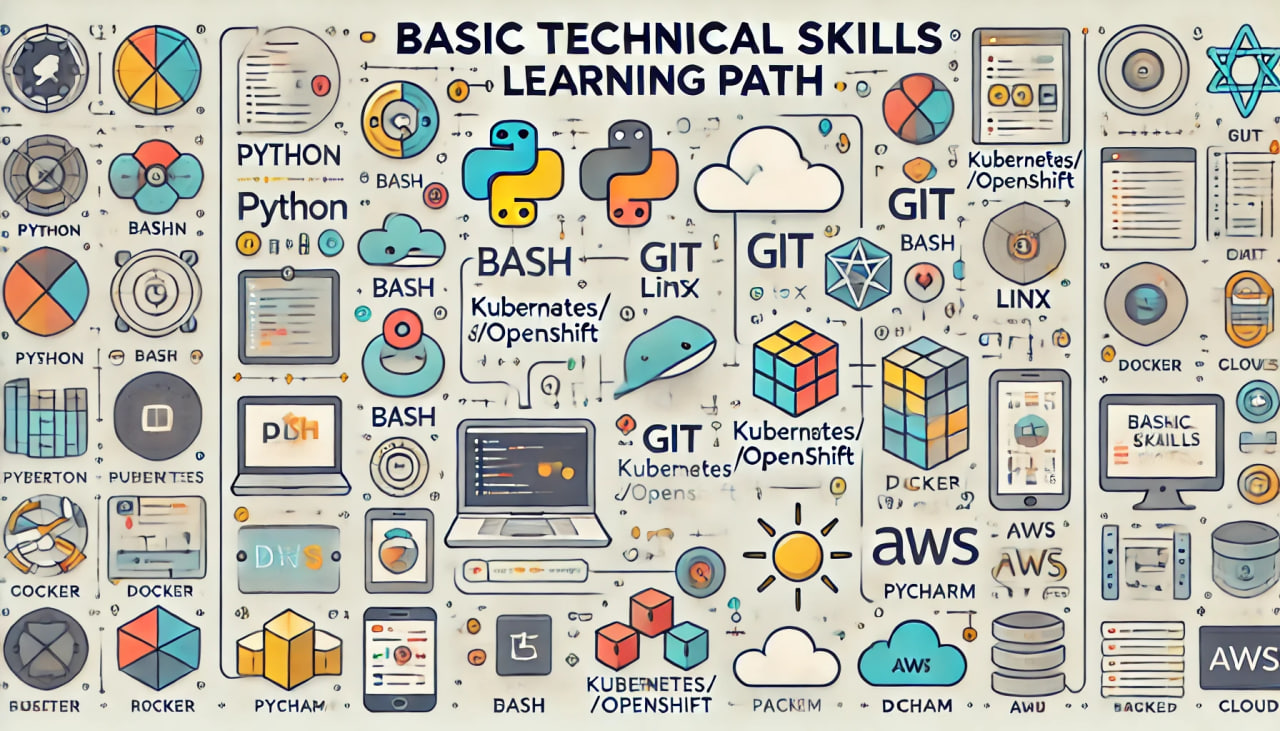
<h3 id="basic-technical-skills-learning-path">Basic Technical Skills Learning Path</h3>
<p><br /><br /></p>

<h4 id="python">Python</h4>
<ul>
  <li><a href="https://www.youtube.com/playlist?list=PL-osiE80TeTt2d9bfVyTiXJA-UTHn6WwU">Python tutorials +++</a></li>
  <li><a href="https://github.com/gregmalcolm/python_koans">Python koans +++</a></li>
  <li><a href="https://py.checkio.org/">Python game +++</a></li>
  <li><a href="https://gto76.github.io/python-cheatsheet/">Comprehensive Python Cheatsheet</a></li>
  <li><a href="https://www.codecademy.com/learn/learn-python-3">Learn Python 3</a>
    <ul>
      <li>Unit tests</li>
      <li>Pytests</li>
    </ul>
  </li>
  <li>Many books are available, some of them:
    <ul>
      <li>Introducing Python, 2nd Edition, Bill Lobanovic</li>
      <li>Practices of the Python Pro, Dane Hillard.</li>
    </ul>
  </li>
</ul>

<h4 id="bash">Bash</h4>
<ul>
  <li><a href="https://www.codecademy.com/catalog/language/bash">Bash/Shell tutorial</a></li>
  <li><a href="https://linuxhandbook.com/bash/">Start Learning Bash</a></li>
  <li><a href="https://github.com/bobbyiliev/introduction-to-bash-scripting">Introduction to Bash Scripting</a></li>
</ul>

<h4 id="git">Git</h4>
<ul>
  <li><a href="https://learngitbranching.js.org/">Learn Git Branching</a></li>
  <li><a href="https://jwiegley.github.io/git-from-the-bottom-up/">Git from the Bottom Up</a></li>
</ul>

<h4 id="linux">Linux</h4>
<ul>
  <li><a href="https://www.youtube.com/watch?v=48-Cd7jipsQ&amp;list=PLsSTa0x6YacC2jNX9iV1ukbA8g4mcTfdE">Red Hat System Administration</a></li>
</ul>

<h4 id="containers">Containers</h4>
<ul>
  <li><a href="https://www.youtube.com/watch?v=31ieHmcTUOk&amp;list=PL4cUxeGkcC9hxjeEtdHFNYMtCpjNBm3h7">Docker</a></li>
  <li><a href="https://www.youtube.com/watch?v=4wTpJqrPh7M&amp;list=PLifqFXf0JOP6fK4P2qOBkUDYHEpHL7Ct8">Podman</a></li>
</ul>

<h4 id="kubernetesopenshift">Kubernetes/Openshift</h4>
<ul>
  <li><a href="https://www.youtube.com/watch?v=QJ4fODH6DXI&amp;list=PL2We04F3Y_43dAehLMT5GxJhtk3mJtkl5">Kubernetes</a></li>
  <li><a href="https://www.youtube.com/watch?v=ykx8gAD9vAw&amp;list=PL2We04F3Y_43DDcvM1bAxF7YIPglrMdif">Openshift</a></li>
</ul>

<h4 id="pycharm">PyCharm</h4>
<ul>
  <li>Complete “Learn IDE features” built-in course in PyCharm Professional.</li>
  <li>Debugging (PDB, IPDB)</li>
  <li>Using Database tools.</li>
</ul>

<h4 id="aws">AWS</h4>
<ul>
  <li>Understand how to use EC2 web console.</li>
</ul>]]></content><author><name>Serhii Turivnyi</name><email>turivniy@gmail.com</email></author><category term="management" /><summary type="html"><![CDATA[]]></summary></entry><entry><title type="html">Reflection</title><link href="https://sturivny.github.io/management/2024/09/16/reflection.html" rel="alternate" type="text/html" title="Reflection" /><published>2024-09-16T00:00:00+00:00</published><updated>2024-09-16T00:00:00+00:00</updated><id>https://sturivny.github.io/management/2024/09/16/reflection</id><content type="html" xml:base="https://sturivny.github.io/management/2024/09/16/reflection.html"><![CDATA[<p><img src="/assets/reflection.png" alt="Backward planning" /></p>

<h4 id="reflection-isthe-examination-of-ones-own-conscious-thoughts-and-feelings">Reflection is the examination of one’s own conscious thoughts and feelings.</h4>
<p><br /><br /></p>

<p>It is all about digging deeper into why we think the way we do, and how external forces like society and culture shape those thoughts. It’s not just about reflecting on your own actions or emotions but questioning the larger influences around you. For example, you might realize that the way you handle conflict at work or communicate with others comes from cultural norms or societal expectations, rather than personal beliefs. This kind of reflection helps you become more self-aware and can lead to breaking habits or patterns that don’t really serve you anymore.</p>

<p>By understanding how societal influences shape our thinking, we also get better at critical thinking and making decisions. Instead of just reacting, we start questioning why we react a certain way in the first place. This kind of deep reflection can also improve communication and relationships, as you start to see where other people’s perspectives come from and how their backgrounds shape their views.</p>

<p>There are several order reflections that can be used for easy examination you thoughts and feelings.</p>

<h4 id="first-order-reflection">First-order reflection</h4>
<p><strong>First-order reflection</strong> refers to the direct, immediate reflection on experiences or actions. It’s the basic level of introspection or awareness where a person simply observes or thinks about their thoughts or experiences without analyzing them in-depth.
Example of the First-Order Reflection:</p>
<ul>
  <li><strong>After finishing a meal</strong>, you think to yourself, “That was delicious, but I might have eaten too much.”</li>
</ul>

<h4 id="second-order-reflection">Second-order reflection</h4>
<p><strong>Second-order reflection</strong> is a deeper level of introspection where you reflect not only on your experiences but also on the <strong>thinking process itself</strong>. In contrast to first-order reflection (which is more immediate and direct), second-order reflection involves <strong>meta-cognition</strong>, or thinking about your thoughts, judgments, and assumptions.</p>

<p>Example of the Second-Order Reflection:</p>
<ul>
  <li><strong>After finishing a meal</strong>,  ”Why do I always enjoy this type of food so much? Is it because it reminds me of my childhood meals, or is it the comfort it provides when I’m stressed?”</li>
</ul>

<h5 id="third-order-reflection">Third-order reflection</h5>
<p><strong>Third-order reflection</strong> is an even deeper level of introspection compared to first- and second-order reflection. It involves reflecting on the process of reflection itself, which is a form of <strong>meta-meta-cognition</strong>. In third-order reflection, you analyze how and why you are reflecting on your thoughts and experiences, and what assumptions, frameworks, or biases are guiding your reflection process.</p>

<p><strong>Example of Third-Order Reflection:</strong></p>
<ul>
  <li><strong>After finishing a meal</strong>: “Why do I always reflect on my meals in terms of taste and emotions? Is it because I was raised in a culture where food is closely tied to emotional experiences and comfort? Am I conditioned to find meaning in food beyond its nutritional value, and is this reflection influenced by societal views on food and eating?”</li>
</ul>

<h4 id="summary">Summary</h4>
<p>In summary, the key difference between the levels of reflection lies in their depth and focus:</p>
<ul>
  <li><strong>First-order reflection</strong> is simple and immediate, focusing on the experience itself.</li>
  <li><strong>Second-order reflection</strong> takes a more analytical approach, examining your own thoughts, feelings, and reactions, and digging into the reasons behind them.</li>
  <li><strong>Third-order reflection</strong> goes even further by questioning the reflection process itself—looking at the assumptions, frameworks, and influences that shape how you think.</li>
</ul>

<h4 id="examples">Examples</h4>
<p>For example, in conversations, this kind of deeper reflection allows you to see how societal, cultural, or systemic forces influence not only what you say but how you engage and process the dialogue.</p>

<p><strong>1. After a disagreement with a colleague:</strong></p>
<ul>
  <li><strong>First-order reflection</strong>: “I’m frustrated that they didn’t understand my point.”</li>
  <li><strong>Second-order reflection</strong>: “Why did I get so frustrated? Was I unclear, or were they being dismissive?”</li>
  <li><strong>Third-order reflection</strong>: “Why do I always feel the need to be understood in conversations like this? Is it about validation or control?”</li>
</ul>

<p><strong>2. After giving advice to a friend:</strong></p>
<ul>
  <li><strong>First-order reflection</strong>: “I hope my advice was helpful.”</li>
  <li><strong>Second-order reflection</strong>: “Why do I always feel the need to give advice instead of just listening? Do I like solving problems?”</li>
  <li><strong>Third-order reflection</strong>: “Why do I assume advice is what my friend needs? Am I imposing my approach on their situation?”</li>
</ul>

<p>Ultimately, reflection helps you grow by letting you see the world more clearly and make more mindful, intentional choices. It’s a powerful way to understand both yourself and the bigger picture of how the world shapes your thoughts and actions.</p>]]></content><author><name>Serhii Turivnyi</name><email>turivniy@gmail.com</email></author><category term="management" /><summary type="html"><![CDATA[]]></summary></entry><entry><title type="html">Backward planning</title><link href="https://sturivny.github.io/management/2024/08/08/backward-planning.html" rel="alternate" type="text/html" title="Backward planning" /><published>2024-08-08T00:00:00+00:00</published><updated>2024-08-08T00:00:00+00:00</updated><id>https://sturivny.github.io/management/2024/08/08/backward-planning</id><content type="html" xml:base="https://sturivny.github.io/management/2024/08/08/backward-planning.html"><![CDATA[<p><img src="/assets/backward-planning-title.png" alt="Backward planning" /></p>

<h4 id="today-were-diving-into-a-super-cool-way-to-get-things-done-called-backward-planning-its-like-starting-at-the-end-of-a-story-and-working-your-way-back-to-the-beginning-sounds-interesting-right-this-isnt-your-usual-step-by-step-plan-instead-its-about-figuring-out-your-final-goal-first-and-then-mapping-out-how-to-get-there-its-a-game-changer-for-anything-youre-planning-be-it-a-big-project-or-even-just-sorting-out-your-career-path-stick-around-and-ill-show-you-how-this-trick-can-make-your-life-a-lot-easier-and-keep-you-on-track-to-get-those-goals">Today, we’re diving into a super cool way to get things done called backward planning. It’s like starting at the end of a story and working your way back to the beginning. Sounds interesting, right? This isn’t your usual step-by-step plan. Instead, it’s about figuring out your final goal first and then mapping out how to get there. It’s a game-changer for anything you’re planning, be it a big project or even just sorting out your career path. Stick around, and I’ll show you how this trick can make your life a lot easier and keep you on track to get those goals.</h4>
<p><br /><br /></p>

<h4 id="crafting-your-future-from-the-end">Crafting Your Future from the End</h4>
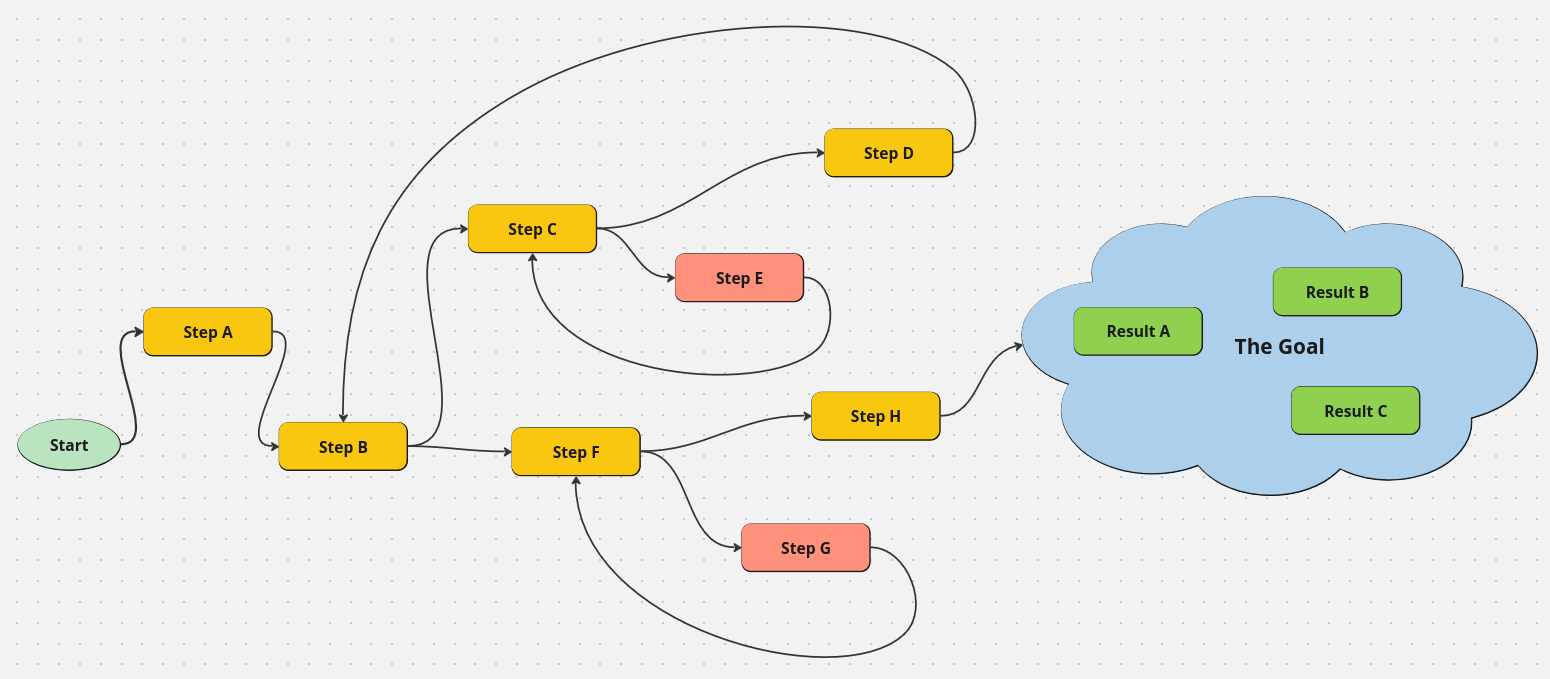
<p>Straight-up planning from the beginning all the way to the end can trip us up sometimes. Here’s why: it’s a piece of cake to think about what to do first, then second, then third, and so on. But when there are a bunch of steps to keep in your head, staying focused on the big picture gets tricky. Most folks tend to see the end goal as a fuzzy, far-off dream that gets clearer and clearer as they move along. The problem is, that thinking like this can lead us down some wrong paths or make us do more work than we need to.</p>

<p><img src="/assets/backward-planning-normal-planning.png" alt="Backward planning" /></p>

<p>Backward planning is like using a GPS. Instead of starting at the beginning, you start with where you want to end up. It’s like picking your destination first and then figuring out the best route to get there. This trick works great for planning all sorts of things – projects, lessons, careers, or even building software.</p>

<p>Think of it as a recipe for success that was whipped up by two smart guys, Grant Wiggins and Jay McTighe, for schools. They wrote a book in 1998 called “Understanding by Design.” What they said was: decide what you want your students to learn by the end, and then plan your lessons and tests backward from there. It’s all about keeping your eyes on the prize and planning the best way to grab it.</p>

<h4 id="from-vision-to-action">From Vision to Action</h4>
<p>Alright, before we dive into “Backward planning,” let’s ask ourselves a few things. Like, “Do I really need to do this?” “What good stuff will happen if I do?” “Are the changes actually going to make things better?” “Is this really the smartest way to shake things up?” If you’re nodding yes to these questions and you’ve got a clear picture of what to do next, then you’re good to go.</p>

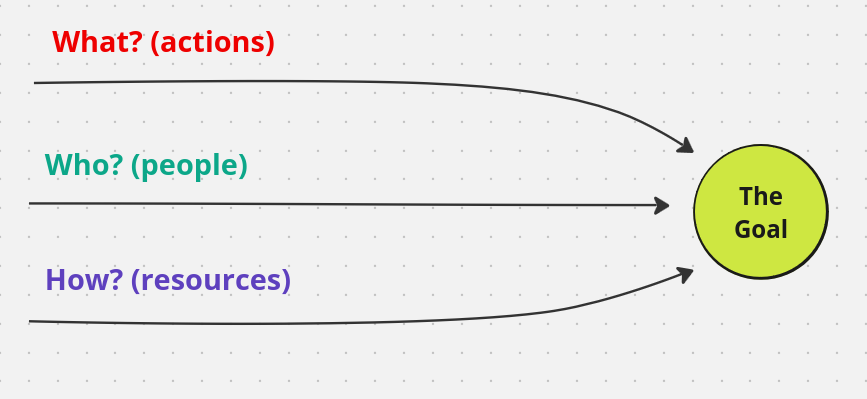
<p>Now, picture what you want things to look like when you’re done. Write it all down—the more details, the merrier. Start thinking about the <strong>“What”</strong> the <strong>“Who”</strong> and the <strong>“How”</strong> of what needs to change.</p>

<p><img src="/assets/backward-planning-what-how-who.png" alt="Backward planning" /></p>

<p>Backward planning is all about the <strong>“What”</strong>, <strong>“Who”</strong> and <strong>“What’s needed”</strong> Let’s break it down in plain talk:</p>

<p>The “What?” is your action list – it’s like your recipe for success. It’s the stuff you’ve gotta do, the moves you’ve gotta make. Picture verbs like ‘bake,’ ‘invent,’ ‘draft,’ ‘launch,’ or just ‘get it done.’</p>

<p>The <strong>“Who”</strong> is your dream team roll call. It’s all about the names of the folks who’ll roll up their sleeves and dive into the work with you.</p>

<p>And the other <strong>“Who”</strong> – that’s a typo, but let’s roll with it and call it the <strong>“What’s needed”</strong> This one’s your shopping list. It’s the gear, the goods, the golden tickets you need to cross the finish line. Think ‘server space in a cloud’ a ‘triple shot of espresso’ to keep you zipping, or a ‘cool million bucks for your budget’.</p>

<p>Put it all together, and it’s like planning the ultimate road trip. You’ve got your map (the <strong>“What”</strong>), your buddies (the <strong>“Who”</strong>), and your packed trunk (the <strong>“What’s needed”</strong>). Now, hit the gas and go!</p>

<h4 id="in-reverse-a-unique-way-to-make-your-coffee">In Reverse: A Unique Way to Make Your Coffee</h4>
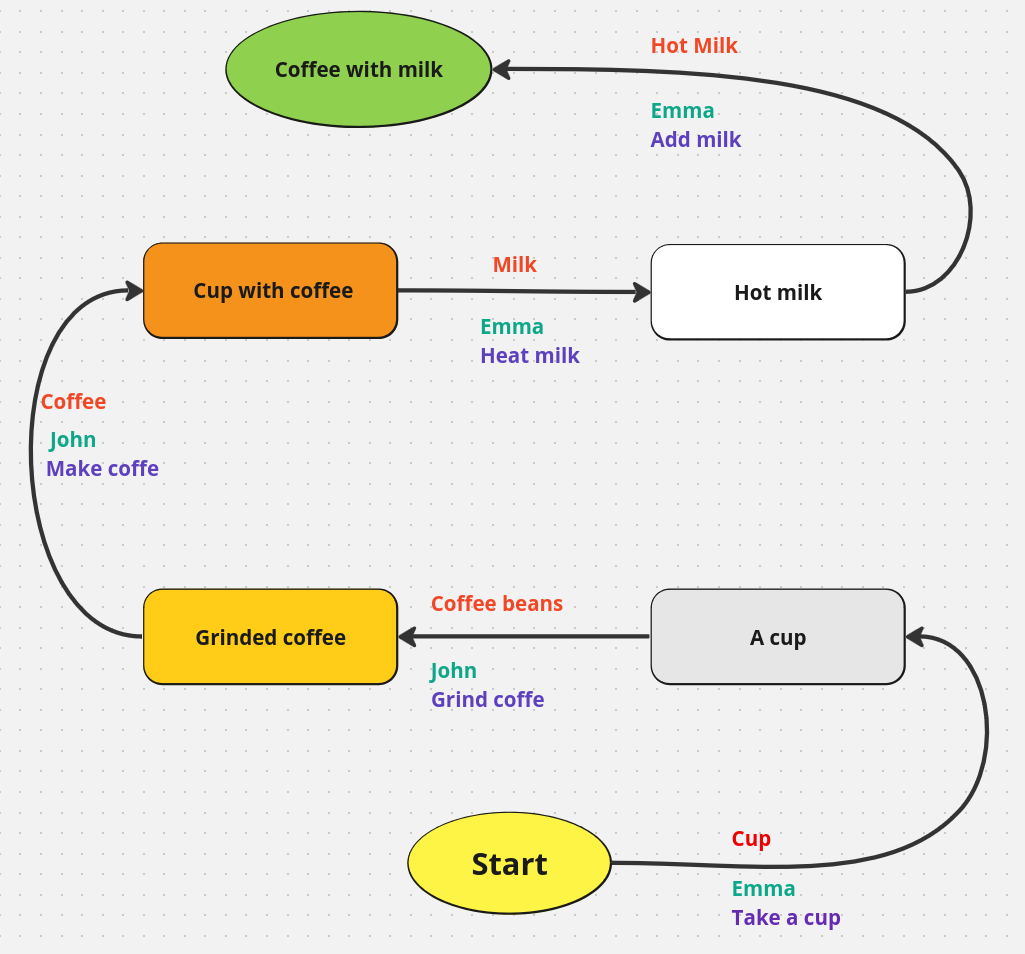
<p>Alright, let’s make a cup of cozy, creamy coffee with milk, but let’s think backward like we’re reading the last page of a mystery novel first and then flipping back to see how it all started.</p>

<p><img src="/assets/backward-planning-process.png" alt="Backward planning" /></p>

<p><strong>Final Product - Coffee with Milk</strong></p>

<blockquote>
  <p>Picture this: a warm, inviting cup of coffee with a splash of milk, just waiting for you to take the first sip. It’s the comfort in a cup we’re aiming for.</p>
</blockquote>

<p><strong>Crucial Element - Hot Milk</strong></p>

<blockquote>
  <p>But before we get that soothing blend, we need some milk that’s been heated up until it’s just steaming. That’s Emma’s job. She warms up the milk until it’s hot and ready to mingle with the coffee.</p>
</blockquote>

<p><strong>Starting Ingredient - Milk</strong></p>

<blockquote>
  <p>Of course, Emma can’t heat the milk if it’s not there. So, we begin with plain, cool milk, straight from the fridge.</p>
</blockquote>

<p><strong>Prior Phase - Cup with Coffee</strong></p>

<blockquote>
  <p>Now, rewind a bit more, and there’s John with a mug of just-brewed, rich, and robust coffee. It’s dark and deep, full of promise.</p>
</blockquote>

<h4 id="preparatory-stage---ground-coffee">Preparatory Stage - Ground Coffee</h4>

<blockquote>
  <p>But wait, how did John get that coffee ready? Ah, he took fragrant, whole coffee beans and ground them up until they were fine and powdery, perfect for brewing.</p>
</blockquote>

<p><strong>Origin - Coffee Beans</strong></p>

<blockquote>
  <p>These little guys are the heroes of our story. They started it all. Whole and unassuming, they’re packed with potential.</p>
</blockquote>

<p><strong>Initial Step - A Cup</strong></p>

<blockquote>
  <p>But even before the coffee brewing action happens, Emma’s on the scene. She picks out a clean, dry cup, setting the stage for the magic to happen.</p>
</blockquote>

<p><strong>Once Upon a Time - Start</strong></p>

<blockquote>
  <p>And here’s where our tale begins. With Emma grabbing that cup and John scooping up the coffee beans, they’re ready to kick off the journey to that perfect cup of coffee with milk.</p>
</blockquote>

<p>These steps are smooth and straightforward, like a well-rehearsed dance. But could we make it even simpler? Sure! If John has a coffee machine that grinds and brews at the press of a button, he could take care of the coffee in one swoop. And if Emma uses a microwave for the milk, it’s a matter of seconds.</p>

<p>So there you have it – coffee with milk made sweet and simple. Two people, a cup, some coffee beans, and half a cup of milk. That’s all it takes to brew a little happiness.</p>

<h4 id="painting-a-picture-of-success">Painting a Picture of Success</h4>
<p>Now, imagine you’ve got a bucket of paint but only a few walls to cover. You wouldn’t want to waste a drop, right? That’s how backward planning helps you with your resources - time, money, people. You only use what you need because you know exactly what’s required to reach that final, shining goal. And the best part? You can see troubles coming from a mile away. With the end already in mind, you can dodge the pitfalls and potholes that might trip you up because you’ve already thought about them. In a nutshell, backward planning keeps you, your team, and your project on a clear, direct path to success.</p>]]></content><author><name>Serhii Turivnyi</name><email>turivniy@gmail.com</email></author><category term="management" /><summary type="html"><![CDATA[]]></summary></entry><entry><title type="html">Effective Argumentation</title><link href="https://sturivny.github.io/management/2024/08/05/effective-argumentation.html" rel="alternate" type="text/html" title="Effective Argumentation" /><published>2024-08-05T00:00:00+00:00</published><updated>2024-08-05T00:00:00+00:00</updated><id>https://sturivny.github.io/management/2024/08/05/effective-argumentation</id><content type="html" xml:base="https://sturivny.github.io/management/2024/08/05/effective-argumentation.html"><![CDATA[<p><img src="/assets/effective_argumentation.png" alt="Effective Argumentation" /></p>

<h4 id="argumentation-is-not-about-making-somebody-think-your-way-but-about-discovering-the-truth">Argumentation is not about making somebody think your way but about discovering the Truth.</h4>
<p><br /><br /></p>

<h4 id="goals-of-argumentation">Goals of Argumentation</h4>
<ol>
  <li>Help someone understand something new.</li>
  <li>Encourage someone to change their mind on a topic.</li>
  <li>Motivate someone to take action – the most challenging goal.</li>
</ol>

<p>Argumentation without a goal is mere conversation. A good argument requires a clear objective; without it, your opponent is likely to prevail.</p>

<h4 id="beyond-words-the-power-of-non-verbal-argumentation">Beyond Words: The Power of Non-Verbal Argumentation</h4>
<p>Argumentation is not solely about words. Your look and movements can also be powerful tools in persuading others.</p>

<p>For example, maintaining eye contact can convey confidence and sincerity, while open body language can make you appear more approachable and trustworthy. Similarly, nodding in agreement as the other person speaks can show that you are actively listening and engaged in the conversation.</p>

<h4 id="the-accumulative-effect-of-argumentation">The Accumulative Effect of Argumentation</h4>
<p>Argumentation has an accumulative effect. You might need several attempts to persuade your opponent. It’s rare to succeed on the first try, but persistence can lead to agreement over time.</p>

<p>For example, if you’re trying to convince a colleague to adopt a new software tool, they might resist initially. However, after showing them multiple instances of how the tool can save time and improve productivity, they may eventually come around and agree with you.</p>

<h4 id="choosing-the-right-moment">Choosing the Right Moment</h4>
<p>The situation must be suitable for argumentation. Persuading someone who is unwilling to engage or too busy to listen is unlikely to succeed.</p>

<p>For example, trying to discuss a new project proposal with your manager during a hectic meeting might not be effective. Instead, waiting for a calmer moment, such as during a one-on-one meeting or when they have more time to listen, can significantly increase your chances of a successful argument.</p>

<h4 id="finding-the-truth-convincing-yourself-first">Finding the Truth: Convincing Yourself First</h4>
<p>One of the most challenging tasks is convincing yourself of the opposite point of view. Great chess players like Bobby Fischer often played against themselves to enhance their skills. They didn’t do this due to a lack of opponents, but to push themselves to think differently and at a higher level.</p>

<p>In the movie “Fight Club” (1999), Tyler Durden, through his alter ego, rejects his former lifestyle, embracing chaos and anti-materialism. However, he ultimately realizes the dangers of this extreme transformation. This illustrates how challenging and transformative it can be to reconsider and change one’s own perspective.</p>

<p>When preparing for a debate or argument, try to first convince yourself of the opposite viewpoint. This practice will definitely help you uncover deeper truths and strengthen your argumentation skills.</p>

<h4 id="the-argumentation-formula">The Argumentation Formula</h4>
<p><strong>Base Argument + Problematic Argument = Final Argument</strong></p>

<ul>
  <li><strong>Base Argument:</strong> The argument your companion agrees with.</li>
  <li><strong>Problematic Argument:</strong> The argument your companion disagrees with.</li>
  <li><strong>Final Argument:</strong> The question you pose.</li>
</ul>

<p><strong>Example:</strong>
Your opponent is a smoker and believes smoking is not harmful.</p>

<ul>
  <li><strong>Base Argument:</strong> Health is important.</li>
  <li><strong>Problematic Argument:</strong> Smoking is dangerous for your health.</li>
  <li><strong>Final Argument:</strong> Maybe it’s better not to smoke?</li>
</ul>

<h4 id="context-specific-arguments">Context-Specific Arguments</h4>
<p>Tailor your arguments to specific situations. Returning to our example of the smoker:</p>

<ul>
  <li>“Imagine you found the love of your life. Would you quit smoking if they asked you to?”</li>
  <li>“Imagine working for a company where non-smokers earn three times more. Would you quit then?”</li>
</ul>

<h4 id="staying-on-topic">Staying on Topic</h4>
<p>People often drift from the main topic during arguments. Keep the discussion focused and help your opponent do the same. Furthermore, assist your opponent by adding details to their arguments.</p>

<p>For example, if you’re discussing the benefits of implementing a new security protocol and the conversation starts veering off into unrelated issues like budget allocations, gently steer it back by saying, “Let’s focus on the security benefits for now, and we can address budget concerns later.” This helps maintain a clear and productive dialogue.</p>

<h4 id="rules-for-effective-argumentation">Rules for Effective Argumentation</h4>
<ol>
  <li>Let them speak first.</li>
  <li>Listen actively.</li>
  <li>Do not interrupt.</li>
  <li>Stick to the main topic.</li>
  <li>Ask for their personal opinion.</li>
  <li>Summarize their arguments and use the formula.</li>
</ol>

<p><strong>Practical Example:</strong>
Our smoker says:
“According to a meta-analysis, current and former smokers have a 41% lower risk of Parkinson’s disease compared to never smokers. Smoking for more than 30 pack-years is associated with a 61% reduced risk.”</p>

<p>Summarize and question:
“So, are you suggesting that smoking is actually good for health?”</p>

<h4 id="case-study-12-angry-men">Case Study: “12 Angry Men”</h4>
<p>The final <a href="https://youtu.be/0jxVnlRdelU?list=RDQMkVx3Hpvz0rw">“Not Guilty” scene in “12 Angry Men”</a> is a powerful example of effective argumentation. This part occurs near the end of the film, around the 90-minute mark.</p>

<p><a href="https://youtu.be/0jxVnlRdelU?list=RDQMkVx3Hpvz0rw"><img src="https://img.youtube.com/vi/0jxVnlRdelU/0.jpg" alt="12 Angry Men - Not Guilty (1957)" /></a></p>

<p><strong>Key Elements:</strong></p>

<ul>
  <li><strong>Let them speak first:</strong> Tom and the other jurors allow the last holdout, Jack, to express his final concerns and reasons for believing the defendant is guilty.</li>
  <li><strong>Listen actively:</strong> The jurors, especially Tom, listen attentively to Jack’s arguments and emotional outbursts.</li>
  <li><strong>Do not interrupt:</strong> Jack is given the floor to speak without interruption, allowing him to fully voice his thoughts.</li>
  <li><strong>Stick to the main topic:</strong> Despite emotional tension, the focus remains on the evidence and the question of reasonable doubt.</li>
  <li><strong>Ask about their personal opinion:</strong> Tom and others gently probe Jack, asking him to reconsider his stance based on the evidence and his personal reasoning.</li>
</ul>

<p>In the end, Jack, emotionally exhausted and realizing that his judgment was clouded by personal biases, reluctantly agrees with the “Not Guilty” verdict. This scene beautifully illustrates how patience, respectful listening, and logical argumentation can lead to a change of heart and consensus.</p>

<p>Effective argumentation is a skill that, when mastered, can lead to understanding, agreement, and action. By following these principles, software engineers and managers can improve their ability to persuade and influence others.</p>]]></content><author><name>Serhii Turivnyi</name><email>turivniy@gmail.com</email></author><category term="management" /><summary type="html"><![CDATA[]]></summary></entry><entry><title type="html">How to Hire a Leader</title><link href="https://sturivny.github.io/management/2024/06/07/how-to-hire-a-leader.html" rel="alternate" type="text/html" title="How to Hire a Leader" /><published>2024-06-07T00:00:00+00:00</published><updated>2024-06-07T00:00:00+00:00</updated><id>https://sturivny.github.io/management/2024/06/07/how-to-hire-a-leader</id><content type="html" xml:base="https://sturivny.github.io/management/2024/06/07/how-to-hire-a-leader.html"><![CDATA[<p><img src="/assets/how-to-hire-a-leader.png" alt="How to Hire a Leader" /></p>

<h4 id="hiring-the-right-leader-for-your-team-is-like-finding-the-perfect-piece-to-complete-a-puzzle-every-step-in-the-process-is-crucial-heres-a-story-that-guides-you-through-the-interview-process-making-it-an-exciting-journey-rather-than-a-daunting-task">Hiring the right leader for your team is like finding the perfect piece to complete a puzzle. Every step in the process is crucial. Here’s a story that guides you through the interview process, making it an exciting journey rather than a daunting task.</h4>
<p><br /><br /></p>

<h4 id="preparation">Preparation</h4>
<p>Before the big day, imagine yourself as a detective gathering clues. You start by checking the candidate’s social media profiles. You learn a lot about someone from their online presence – their interests, their interactions, and sometimes even their sense of humor. Next, you can reach out to mutual connections for feedback. A friend’s recommendation can sometimes reveal more than a resume ever could.</p>

<h4 id="breaking-the-ice">Breaking the Ice</h4>
<p>The interview starts, and it’s time for the first question: “Tell me about yourself. Who are you, what’s your expertise, and why do you do it?” This is your chance to look beyond the professional surface.
A candidate should know who they are, what their skills are, and why they do what they do. You’re looking for unique and unexpected answers, like discovering a hidden treasure. Maybe the candidate talks about an unusual hobby or a surprising journey that led them to their field.</p>

<h4 id="uncovering-motivation">Uncovering Motivation</h4>
<p>Next, you dive into their motivation. “Why do you want to develop in this field?” you inquire. A strong candidate will give you a well-thought-out, logical answer. Maybe they talk about a childhood fascination or a personal experience that sparked their interest. This question helps you see if their passion aligns with the company’s mission.</p>

<h4 id="beyond-the-resume">Beyond the Resume</h4>
<p>Then, you explore their interests. “What books, magazines, and sites do you read?” you ask. “Have you attended or presented at any forums, seminars, or conferences?” This part of the conversation often reveals their commitment to continuous learning. You might discover that they read industry blogs daily or attend tech conferences yearly. Their hobbies can also tell you a lot – perhaps they build robots in their spare time or are avid marathon runners.</p>

<h4 id="relationships-matter">Relationships Matter</h4>
<p>You then ask about their past work experiences and relationships with colleagues. “Tell me about your past jobs and your relationships with your colleagues,” you say. Their answers give you a glimpse into their interpersonal skills. Do they speak positively about their former colleagues? Do they have stories of teamwork and collaboration? This can show how they might fit into your team.
The best answers come from candidates who think well of others. If they mention negative aspects about people but provide solid reasons, that’s also acceptable. However, if a candidate thinks that most people are incompetent, they might not be the best fit for your team.
If you’re short on time, ask a key question to gauge their relationships: “Can you suggest someone for this position?” If they respond positively and can recommend several people, it indicates they have good relationships with others.</p>

<h4 id="the-main-question">The Main Question</h4>
<p>The main question you ask is about self-improvement. “What do you feel you lack as an expert and as a person to reach your full potential?” you inquire. Follow up with, “What steps are you going to take to develop these qualities?” A great candidate will be honest about their weaknesses and have a clear plan for growth. They might mention taking courses, seeking mentors, or setting specific goals.</p>

<h4 id="defining-the-expert">Defining the Expert</h4>
<p>People often think that an expert knows everything and can do anything. But let’s look at it differently. An expert is someone who knows exactly what they won’t do and can explain why. An expert should have clear boundaries and a strong sense of direction. This means they have tried various tools and approaches, have experience in many areas, and know exactly what they won’t do, even for money. Ask the candidate about the things and tools they would never use or do.</p>

<h4 id="imagining-the-first-steps">Imagining the First Steps</h4>
<p>Before you end the interview, invite the candidate to step into the future with you. Ask: “Imagine you joined us next month. What would you do in your first weeks here?” Let them describe how they would start. Good answers usually include a simple plan: ask questions, understand priorities, then suggest improvements. A strong candidate also explains what they would need from you and the team at the start.</p>

<h4 id="uncovering-risks">Uncovering Risks</h4>
<p>During the interview, you take diligent notes. You jot down risks and any unexpected or uncommon responses. These notes will be invaluable later.
After the interview, it’s important to let the dust settle. Leave it for 24 hours. Don’t let emotions cloud your judgment. This time allows you to reflect on the conversation and the candidate’s fit for the role.</p>

<h4 id="the-best-candidate">The Best Candidate</h4>
<p>In the end, the best candidate is someone who knows their strengths and weaknesses, thinks positively about others, and is always eager to learn. They have hobbies and interests that show they are well-rounded individuals.
By approaching the interview process as an exciting journey, you’ll not only find the best candidate but also make the experience enjoyable for both you and the interviewee. Happy hiring!</p>]]></content><author><name>Serhii Turivnyi</name><email>turivniy@gmail.com</email></author><category term="management" /><summary type="html"><![CDATA[]]></summary></entry><entry><title type="html">Retrospectives</title><link href="https://sturivny.github.io/management/2023/01/30/retrospective.html" rel="alternate" type="text/html" title="Retrospectives" /><published>2023-01-30T00:00:00+00:00</published><updated>2023-01-30T00:00:00+00:00</updated><id>https://sturivny.github.io/management/2023/01/30/retrospective</id><content type="html" xml:base="https://sturivny.github.io/management/2023/01/30/retrospective.html"><![CDATA[<p><img src="/assets/retrospectives.png" alt="Retrospectives" /></p>

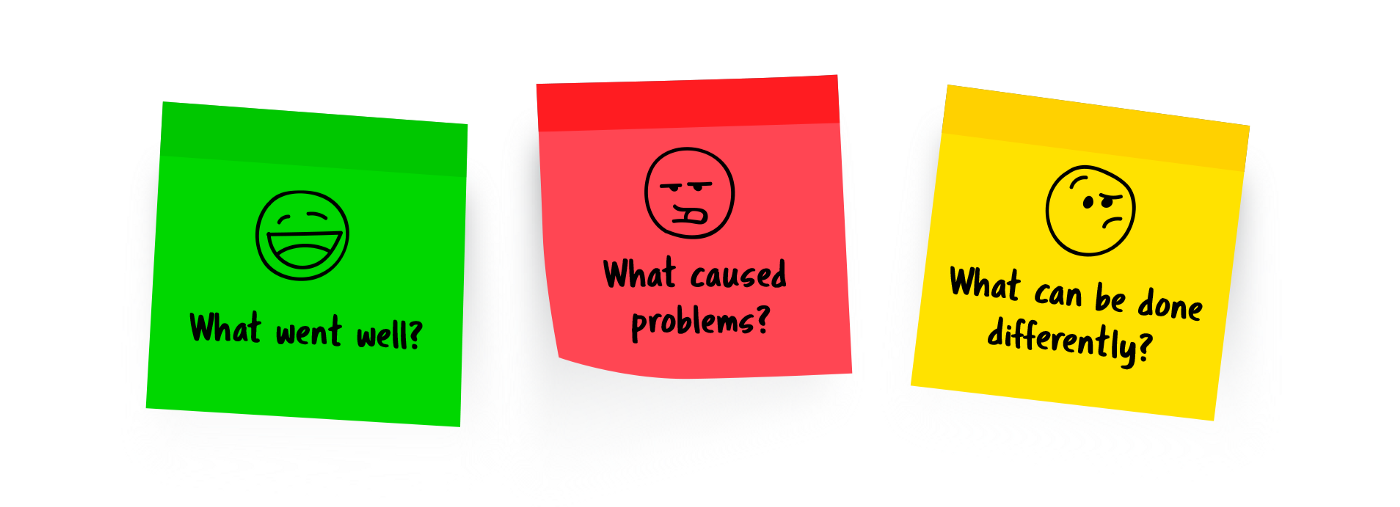
<h4 id="a-retrospective-in-it-is-a-meeting-held-by-a-development-team-to-review-the-past-sprint-or-project-and-identify-areas-for-improvement-the-goal-is-to-evaluate-the-teams-process-communication-and-productivity-and-make-changes-to-increase-efficiency-and-effectiveness-in-future-work"><strong>A retrospective in IT is a meeting held by a development team to review the past sprint or project and identify areas for improvement. The goal is to evaluate the team’s process, communication, and productivity, and make changes to increase efficiency and effectiveness in future work.</strong></h4>
<p><br /><br /></p>

<h4 id="what-is-a-retrospective">What is a retrospective?</h4>
<p>In a positive retrospective, the team can still evaluate their processes and identify ways to improve, enhance their successes, and maintain their high performance. This can help keep the team motivated, engaged, and focused on continuous improvement.</p>

<p>Retrospectives are important because they:</p>

<ul>
  <li>Foster continuous improvement by identifying and addressing pain points and areas for improvement.</li>
  <li>Encourage open and honest communication among team members.</li>
  <li>Provide an opportunity for team members to voice their opinions and perspectives.</li>
  <li>Increase team collaboration and cohesion.</li>
  <li>Promote learning and knowledge sharing.</li>
  <li>Foster a culture of transparency and accountability.</li>
  <li>Help the team to reflect on past successes and failures and make data-driven decisions for future work.
<br /><br /></li>
</ul>

<h4 id="how-often-do-we-need-to-have-retrospectives">How often do we need to have retrospectives?</h4>

<p>The frequency of retrospectives can vary depending on the team, project, and organization. However, common frequencies include:</p>

<ul>
  <li>After every sprint in Agile software development.</li>
  <li>At the end of each project or major deliverable.</li>
  <li>ASAP especially for long-term projects.</li>
</ul>

<p>Ultimately, the frequency should be frequent enough to allow for continuous improvement, but not so frequent that they become a burden on the team’s time and resources. The team should regularly evaluate the frequency of retrospectives to ensure they are providing value and adjust as needed.
<br /><br /></p>

<h4 id="do-we-need-a-retrospective-even-if-everything-went-well">Do we need a retrospective even if everything went well?</h4>

<p>It’s still valuable to have a retrospective even if everything went well. Positive things are keeping the team motivated. Focusing on the positive aspects can confirm its worth and sustain continued effort. This provides an opportunity to reflect on the team’s successes and identify areas for improvement, no matter how small. Additionally, retrospectives can foster open communication and help build team cohesion, even if there were no major issues to address.</p>

<p>It is important to review action items from previous retrospectives, collect data and items relevant to the current retrospective, and check for decisions made in past retrospectives as these will help provide a comprehensive picture of the team’s progress and help inform future decision-making. This helps ensure accountability, continuous improvement, and effective use of retrospective meetings.
<br /><br /></p>

<h4 id="who-can-lead-retrospectives">Who can lead retrospectives?</h4>

<p>Retrospectives can be led by various team members or stakeholders. It’s important to choose a leader who can facilitate a productive and positive discussion, encourage open and honest communication, and drive actionable outcomes. The leader should also be neutral and unbiased, and not have any personal stake in the outcome of the retrospective. A third-party facilitator, such as a scrum master, is ideal for a retrospective as it allows for effective discussions between the leader and team members. The team manager should not be present to ensure that the rest of the team feels secure. If the team lacks someone else to run the retro, any member of the team can be valuable in doing so.</p>

<p>To involve people in a retrospective effectively, you can use the following techniques:</p>

<ul>
  <li>Encourage active participation: Ask for input from all team members and create a safe and inclusive environment for discussion.</li>
  <li>Ensure anonymity: Provide a means for team members to provide anonymous feedback to encourage open and honest communication.</li>
  <li>Solicit input ahead of time: Send out a pre-meeting survey or ask for specific feedback ahead of time to ensure all voices are heard.</li>
  <li>Provide clear agenda: Clearly communicate the purpose and goals of the retrospective to ensure everyone is on the same page.</li>
  <li>Use visual aids: Use visual aids such as sticky notes, whiteboards, or mind maps to help organize and categorize discussion points.</li>
  <li>Make it interactive: Use games, activities, or other interactive methods to keep the retrospective engaging and avoid monotony.</li>
  <li>Follow up: Follow up on any action items or decisions made during the retrospective to keep everyone involved and accountable.</li>
</ul>

<p>By involving all team members and creating a positive and productive atmosphere, retrospectives can be a valuable tool for continuous improvement.
<br /><br /></p>

<h4 id="what-action-items-should-be-done-after-a-retrospective">What action items should be done after a retrospective?</h4>

<p>After a retrospective, the following action items should be executed:</p>

<ul>
  <li>Prioritize and assign tasks based on the outcome of the retrospective.</li>
  <li>Set clear goals and deadlines for each action item.</li>
  <li>Ensure that everyone involved in the retrospective is aware of the action items and understands their role in executing them.</li>
  <li>Document the outcomes of the retrospective, including the action items and any decisions made.</li>
  <li>Regularly follow up on the progress of the action items to ensure they are being completed as planned.</li>
  <li>Incorporate any lessons learned into future retrospectives and continuous improvement processes.</li>
</ul>

<p>It is important to execute action items in a timely manner to show that the retrospective was a valuable exercise, and to continuously improve the team’s processes, communication, and overall effectiveness.
<br /><br /></p>

<h4 id="аrе-there-disadvantages">Аrе there disadvantages?</h4>

<p>There are some potential disadvantages of having retrospectives, including:</p>

<ul>
  <li>Time consumption: Retrospectives can take up a significant amount of time, especially if they are frequent or involve a large team.</li>
  <li>Resistance to change: Some team members may resist making changes or be resistant to new ideas that are brought up in retrospectives.</li>
  <li>Emotional responses: Retrospectives can sometimes lead to negative emotions or conflicts if team members feel criticized or their opinions are not heard.</li>
  <li>Lack of objectivity: If the leader of the retrospective has a personal stake in the outcome, the discussion may not be neutral and objective.</li>
</ul>

<p>To minimize these disadvantages, it’s important to have well-facilitated and productive retrospectives, prioritize action items effectively, and regularly follow up on progress.</p>]]></content><author><name>Serhii Turivnyi</name><email>turivniy@gmail.com</email></author><category term="management" /><summary type="html"><![CDATA[]]></summary></entry></feed>