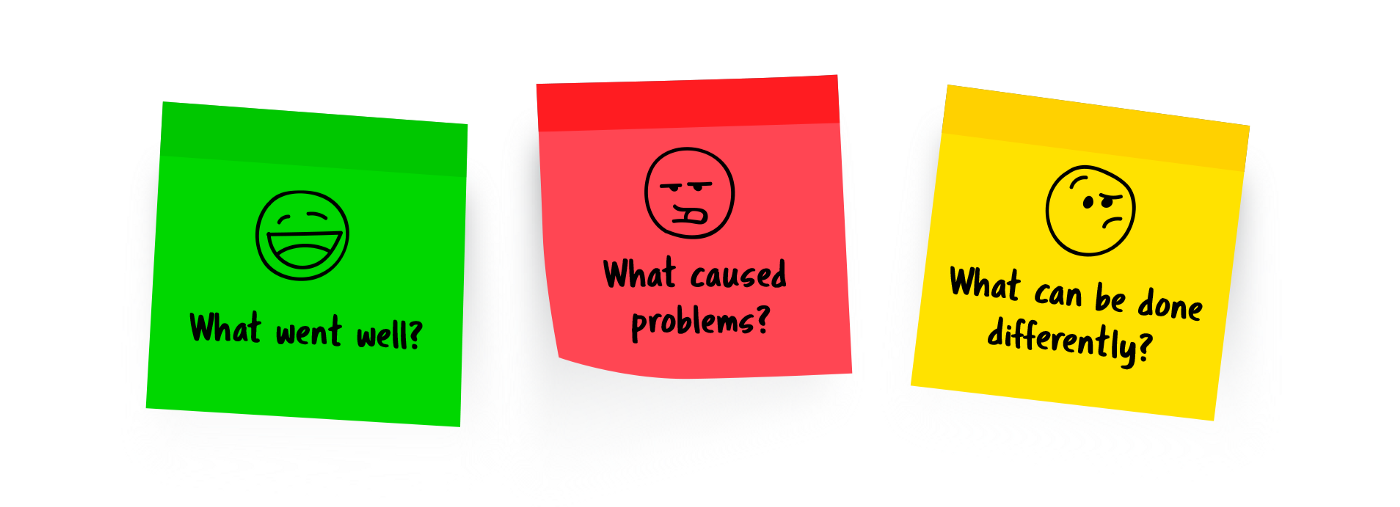
A retrospective in IT is a meeting held by a development team to review the past sprint or project and identify areas for improvement. The goal is to evaluate the team’s process, communication, and productivity, and make changes to increase efficiency and effectiveness in future work.
What is a retrospective?
In a positive retrospective, the team can still evaluate their processes and identify ways to improve, enhance their successes, and maintain their high performance. This can help keep the team motivated, engaged, and focused on continuous improvement.
Retrospectives are important because they:
- Foster continuous improvement by identifying and addressing pain points and areas for improvement.
- Encourage open and honest communication among team members.
- Provide an opportunity for team members to voice their opinions and perspectives.
- Increase team collaboration and cohesion.
- Promote learning and knowledge sharing.
- Foster a culture of transparency and accountability.
- Help the team to reflect on past successes and failures and make data-driven decisions for future work.
How often do we need to have retrospectives?
The frequency of retrospectives can vary depending on the team, project, and organization. However, common frequencies include:
- After every sprint in Agile software development.
- At the end of each project or major deliverable.
- ASAP especially for long-term projects.
Ultimately, the frequency should be frequent enough to allow for continuous improvement, but not so frequent that they become a burden on the team’s time and resources. The team should regularly evaluate the frequency of retrospectives to ensure they are providing value and adjust as needed.
Do we need a retrospective even if everything went well?
It’s still valuable to have a retrospective even if everything went well. Positive things are keeping the team motivated. Focusing on the positive aspects can confirm its worth and sustain continued effort. This provides an opportunity to reflect on the team’s successes and identify areas for improvement, no matter how small. Additionally, retrospectives can foster open communication and help build team cohesion, even if there were no major issues to address.
It is important to review action items from previous retrospectives, collect data and items relevant to the current retrospective, and check for decisions made in past retrospectives as these will help provide a comprehensive picture of the team’s progress and help inform future decision-making. This helps ensure accountability, continuous improvement, and effective use of retrospective meetings.
Who can lead retrospectives?
Retrospectives can be led by various team members or stakeholders. It’s important to choose a leader who can facilitate a productive and positive discussion, encourage open and honest communication, and drive actionable outcomes. The leader should also be neutral and unbiased, and not have any personal stake in the outcome of the retrospective. A third-party facilitator, such as a scrum master, is ideal for a retrospective as it allows for effective discussions between the leader and team members. The team manager should not be present to ensure that the rest of the team feels secure. If the team lacks someone else to run the retro, any member of the team can be valuable in doing so.
To involve people in a retrospective effectively, you can use the following techniques:
- Encourage active participation: Ask for input from all team members and create a safe and inclusive environment for discussion.
- Ensure anonymity: Provide a means for team members to provide anonymous feedback to encourage open and honest communication.
- Solicit input ahead of time: Send out a pre-meeting survey or ask for specific feedback ahead of time to ensure all voices are heard.
- Provide clear agenda: Clearly communicate the purpose and goals of the retrospective to ensure everyone is on the same page.
- Use visual aids: Use visual aids such as sticky notes, whiteboards, or mind maps to help organize and categorize discussion points.
- Make it interactive: Use games, activities, or other interactive methods to keep the retrospective engaging and avoid monotony.
- Follow up: Follow up on any action items or decisions made during the retrospective to keep everyone involved and accountable.
By involving all team members and creating a positive and productive atmosphere, retrospectives can be a valuable tool for continuous improvement.
What action items should be done after a retrospective?
After a retrospective, the following action items should be executed:
- Prioritize and assign tasks based on the outcome of the retrospective.
- Set clear goals and deadlines for each action item.
- Ensure that everyone involved in the retrospective is aware of the action items and understands their role in executing them.
- Document the outcomes of the retrospective, including the action items and any decisions made.
- Regularly follow up on the progress of the action items to ensure they are being completed as planned.
- Incorporate any lessons learned into future retrospectives and continuous improvement processes.
It is important to execute action items in a timely manner to show that the retrospective was a valuable exercise, and to continuously improve the team’s processes, communication, and overall effectiveness.
Аrе there disadvantages?
There are some potential disadvantages of having retrospectives, including:
- Time consumption: Retrospectives can take up a significant amount of time, especially if they are frequent or involve a large team.
- Resistance to change: Some team members may resist making changes or be resistant to new ideas that are brought up in retrospectives.
- Emotional responses: Retrospectives can sometimes lead to negative emotions or conflicts if team members feel criticized or their opinions are not heard.
- Lack of objectivity: If the leader of the retrospective has a personal stake in the outcome, the discussion may not be neutral and objective.
To minimize these disadvantages, it’s important to have well-facilitated and productive retrospectives, prioritize action items effectively, and regularly follow up on progress.