Today, we’re diving into a super cool way to get things done called backward planning. It’s like starting at the end of a story and working your way back to the beginning. Sounds interesting, right? This isn’t your usual step-by-step plan. Instead, it’s about figuring out your final goal first and then mapping out how to get there. It’s a game-changer for anything you’re planning, be it a big project or even just sorting out your career path. Stick around, and I’ll show you how this trick can make your life a lot easier and keep you on track to get those goals.
Crafting Your Future from the End
Straight-up planning from the beginning all the way to the end can trip us up sometimes. Here’s why: it’s a piece of cake to think about what to do first, then second, then third, and so on. But when there are a bunch of steps to keep in your head, staying focused on the big picture gets tricky. Most folks tend to see the end goal as a fuzzy, far-off dream that gets clearer and clearer as they move along. The problem is, that thinking like this can lead us down some wrong paths or make us do more work than we need to.
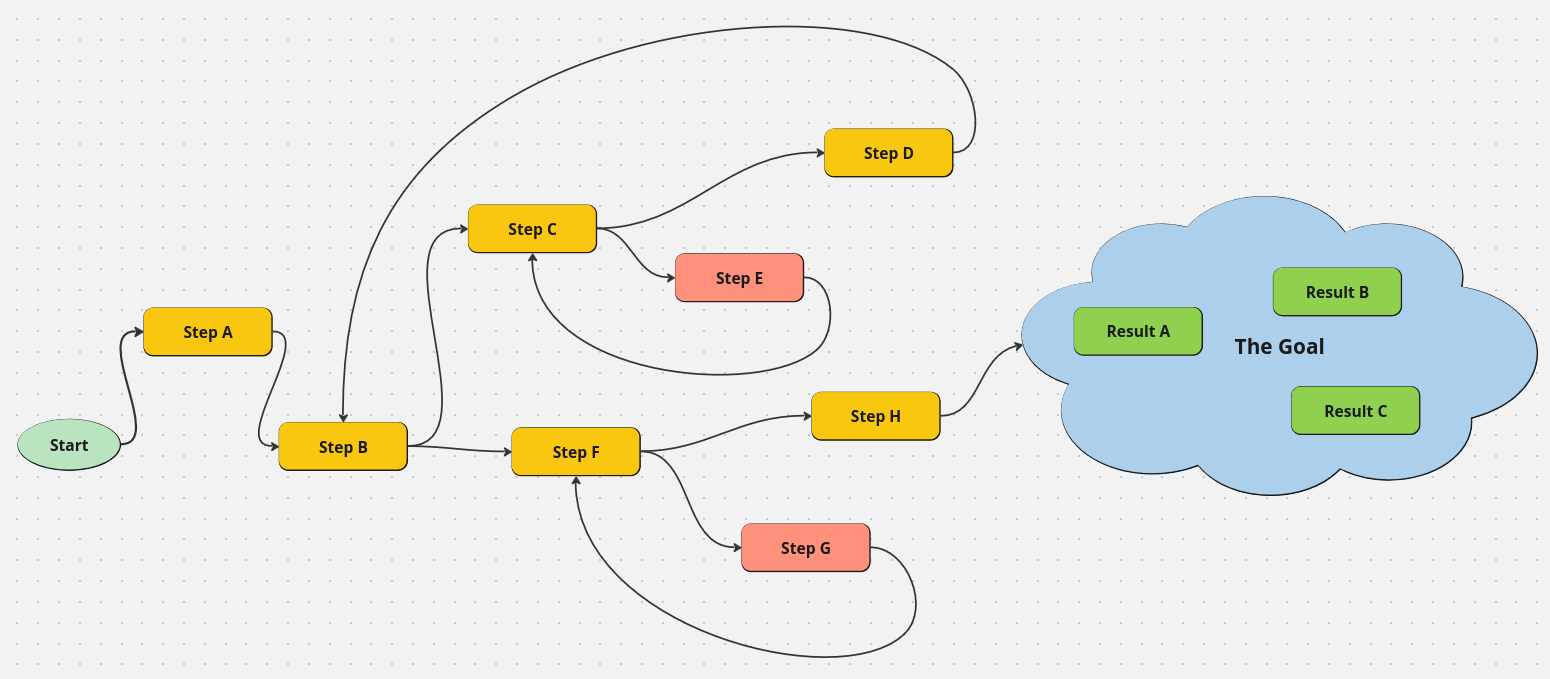
Backward planning is like using a GPS. Instead of starting at the beginning, you start with where you want to end up. It’s like picking your destination first and then figuring out the best route to get there. This trick works great for planning all sorts of things – projects, lessons, careers, or even building software.
Think of it as a recipe for success that was whipped up by two smart guys, Grant Wiggins and Jay McTighe, for schools. They wrote a book in 1998 called “Understanding by Design.” What they said was: decide what you want your students to learn by the end, and then plan your lessons and tests backward from there. It’s all about keeping your eyes on the prize and planning the best way to grab it.
From Vision to Action
Alright, before we dive into “Backward planning,” let’s ask ourselves a few things. Like, “Do I really need to do this?” “What good stuff will happen if I do?” “Are the changes actually going to make things better?” “Is this really the smartest way to shake things up?” If you’re nodding yes to these questions and you’ve got a clear picture of what to do next, then you’re good to go.
Now, picture what you want things to look like when you’re done. Write it all down—the more details, the merrier. Start thinking about the “What” the “Who” and the “How” of what needs to change.
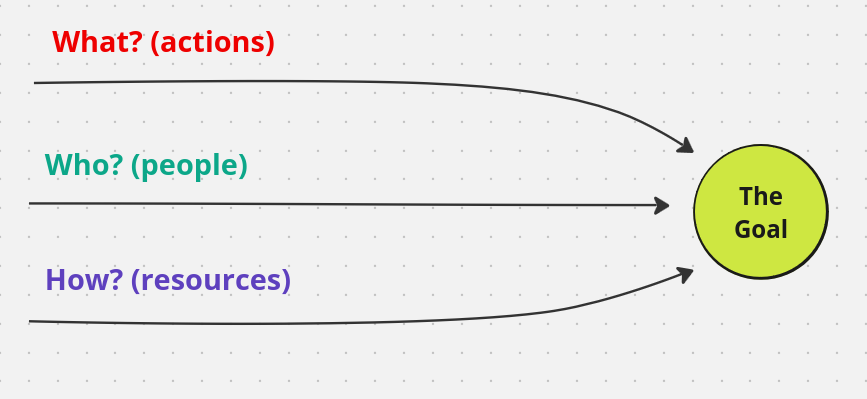
Backward planning is all about the “What”, “Who” and “What’s needed” Let’s break it down in plain talk:
The “What?” is your action list – it’s like your recipe for success. It’s the stuff you’ve gotta do, the moves you’ve gotta make. Picture verbs like ‘bake,’ ‘invent,’ ‘draft,’ ‘launch,’ or just ‘get it done.’
The “Who” is your dream team roll call. It’s all about the names of the folks who’ll roll up their sleeves and dive into the work with you.
And the other “Who” – that’s a typo, but let’s roll with it and call it the “What’s needed” This one’s your shopping list. It’s the gear, the goods, the golden tickets you need to cross the finish line. Think ‘server space in a cloud’ a ‘triple shot of espresso’ to keep you zipping, or a ‘cool million bucks for your budget’.
Put it all together, and it’s like planning the ultimate road trip. You’ve got your map (the “What”), your buddies (the “Who”), and your packed trunk (the “What’s needed”). Now, hit the gas and go!
In Reverse: A Unique Way to Make Your Coffee
Alright, let’s make a cup of cozy, creamy coffee with milk, but let’s think backward like we’re reading the last page of a mystery novel first and then flipping back to see how it all started.
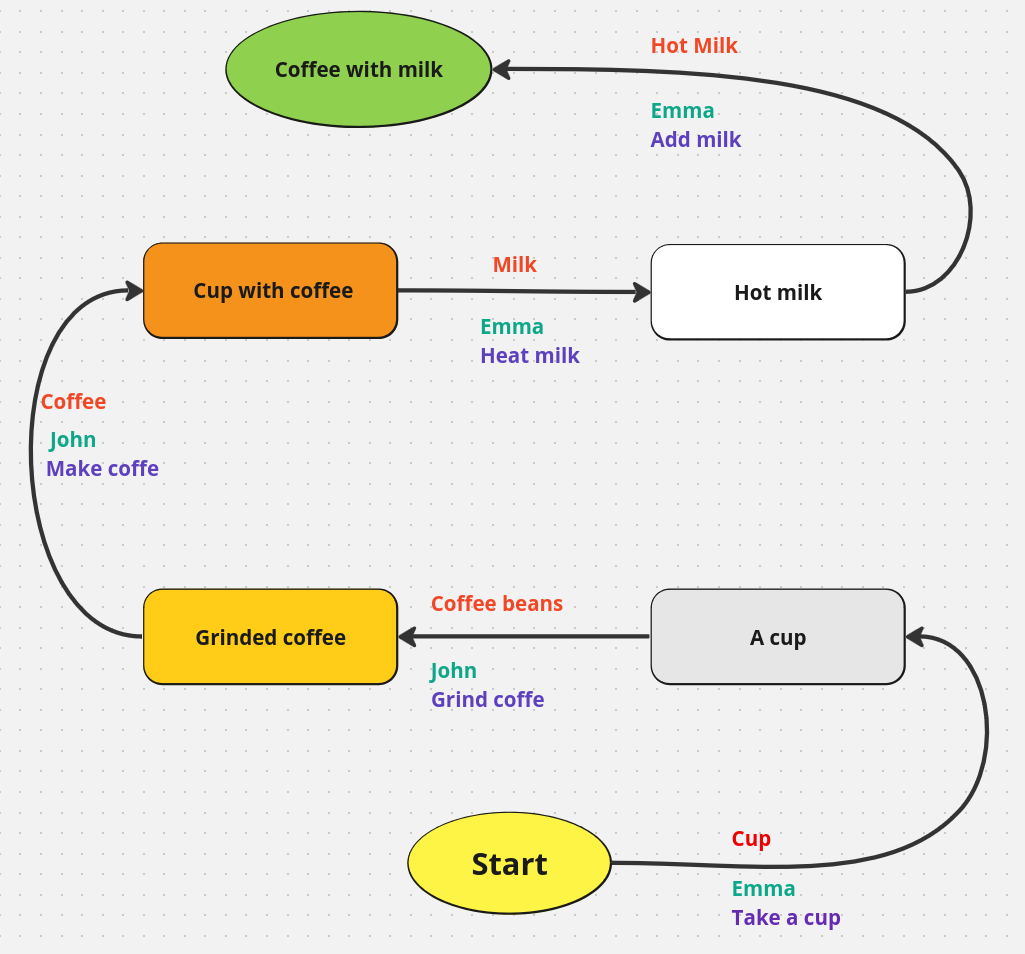
Final Product - Coffee with Milk
Picture this: a warm, inviting cup of coffee with a splash of milk, just waiting for you to take the first sip. It’s the comfort in a cup we’re aiming for.
Crucial Element - Hot Milk
But before we get that soothing blend, we need some milk that’s been heated up until it’s just steaming. That’s Emma’s job. She warms up the milk until it’s hot and ready to mingle with the coffee.
Starting Ingredient - Milk
Of course, Emma can’t heat the milk if it’s not there. So, we begin with plain, cool milk, straight from the fridge.
Prior Phase - Cup with Coffee
Now, rewind a bit more, and there’s John with a mug of just-brewed, rich, and robust coffee. It’s dark and deep, full of promise.
Preparatory Stage - Ground Coffee
But wait, how did John get that coffee ready? Ah, he took fragrant, whole coffee beans and ground them up until they were fine and powdery, perfect for brewing.
Origin - Coffee Beans
These little guys are the heroes of our story. They started it all. Whole and unassuming, they’re packed with potential.
Initial Step - A Cup
But even before the coffee brewing action happens, Emma’s on the scene. She picks out a clean, dry cup, setting the stage for the magic to happen.
Once Upon a Time - Start
And here’s where our tale begins. With Emma grabbing that cup and John scooping up the coffee beans, they’re ready to kick off the journey to that perfect cup of coffee with milk.
These steps are smooth and straightforward, like a well-rehearsed dance. But could we make it even simpler? Sure! If John has a coffee machine that grinds and brews at the press of a button, he could take care of the coffee in one swoop. And if Emma uses a microwave for the milk, it’s a matter of seconds.
So there you have it – coffee with milk made sweet and simple. Two people, a cup, some coffee beans, and half a cup of milk. That’s all it takes to brew a little happiness.
Painting a Picture of Success
Now, imagine you’ve got a bucket of paint but only a few walls to cover. You wouldn’t want to waste a drop, right? That’s how backward planning helps you with your resources - time, money, people. You only use what you need because you know exactly what’s required to reach that final, shining goal. And the best part? You can see troubles coming from a mile away. With the end already in mind, you can dodge the pitfalls and potholes that might trip you up because you’ve already thought about them. In a nutshell, backward planning keeps you, your team, and your project on a clear, direct path to success.